The Problem Every Growth Marketer Faces
When I joined Genext Students (a Navneet Education vertical) as Senior Manager of Growth Marketing, Customer Acquisition Cost was sitting at ₹4,125 per student. The LTV:CAC ratio was nowhere near sustainable scale.
This is the challenge every Head of Marketing eventually faces: how do you grow faster and more efficiently at the same time? Most teams pick one. I built a system to do both.
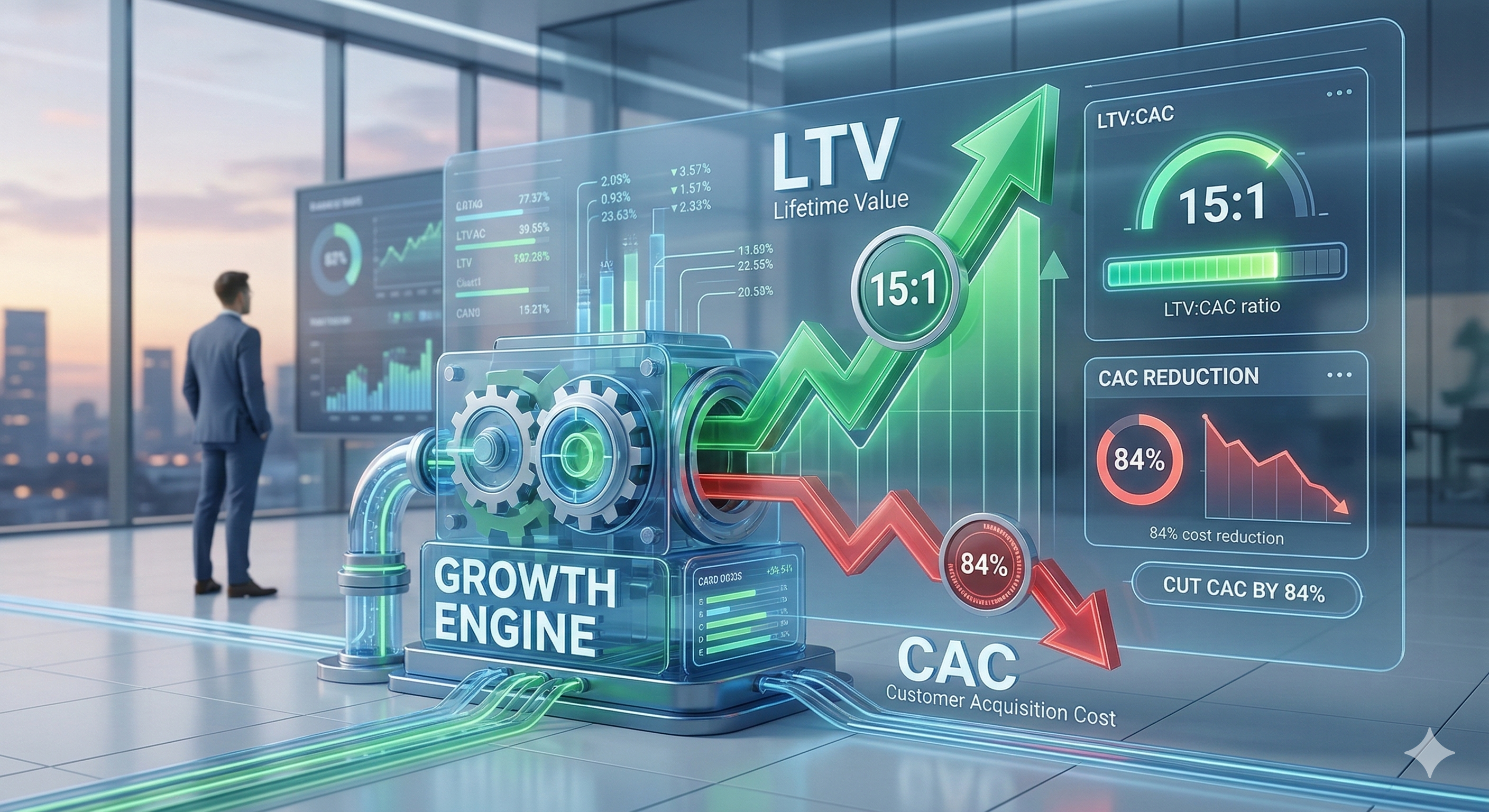
Here’s exactly how I engineered a 15:1 LTV:CAC ratio and reduced CAC by 84% — from ₹4,125 to ₹650.
Step 1: Diagnose Before You Prescribe
The first mistake most growth teams make is jumping straight to tactics without understanding why the current CAC is what it is. I spent the first 30 days doing a full funnel audit across every acquisition channel.
What I found: 70% of ad spend was concentrated on channels with the highest volume but lowest conversion-to-paid rate. The highest-converting segments were barely targeted in acquisition. Onboarding drop-off at Day 3 was killing LTV before it could compound.
The insight: we weren’t acquiring the wrong customers — we were acquiring the right customers inefficiently, then failing to activate them properly.
Step 2: Redefine Your “Best Customer” Profile
Most marketing teams define ideal customers by acquisition metrics — who converts cheapest. That’s a trap. I went upstream and defined our ICP by lifetime value: which student segments had the highest course completion rates, the most upsell behavior, and the strongest referral patterns?
Once I had that profile, I reverse-engineered acquisition. Instead of asking “how do we get more signups?”, the question became “how do we get more of these specific people to sign up?” This single shift changed our targeting, creative, channel mix, and landing page messaging — all at once.
Step 3: The Three-Lever Framework for CAC Reduction
Cutting CAC by 84% came from disciplined pressure on three levers simultaneously:
Lever 1: Channel Concentration Efficiency
Reallocated budget from high-volume/low-efficiency channels to the top 2 channels that drove our best-fit customers. Improved creative testing velocity — running 40+ creative variants per quarter — and let data pick winners fast.
Lever 2: Landing Page Conversion Rate Optimization
Every 1% improvement in CVR equals a 1% reduction in CAC. Structured A/B tests across headlines, social proof, form length, and CTA copy moved landing page CVR from 3.2% to 7.8% over 6 months — effectively cutting CPL in half without touching media spend.
Lever 3: Retargeting and Warm Audience Nurturing
Built a 5-stage retargeting funnel from awareness to paid with distinct creative at each stage. Warm retargeting CAC came in at 60% below cold acquisition CAC.
Step 4: Compounding LTV While Cutting CAC
The ratio matters more than either number in isolation. While cutting CAC, I ran a parallel track to improve LTV:
- Onboarding redesign: 7-day activation sequence (email + in-app) increased Day-30 retention by 34%
- Upsell engine: Identified behavioral triggers (lesson completions, quiz scores) that predicted upsell readiness, then automated contextual upgrade offers
- Referral program: Launched peer referral program tied to course milestones, generating 22% of new paid signups at near-zero acquisition cost
Result: average student LTV increased by 2.3x over 18 months while CAC dropped by 84%. That’s how you build a 15:1 LTV:CAC ratio.
Step 5: Build the Measurement Infrastructure First
None of this works without proper attribution. Before optimizing anything: multi-touch attribution across all channels, cohort-based LTV tracking, weekly CAC dashboards by channel and creative, and real-time conversion funnel monitoring with alert thresholds.
What a 15:1 LTV:CAC Ratio Actually Means for the Business
When your LTV:CAC ratio crosses 3:1, investors get excited. At 15:1, the business can reinvest aggressively and expand into new markets without sacrificing unit economics. More importantly, it proves that marketing isn’t a cost center — it’s the growth engine of the business.
Key Takeaways
- Audit before you optimize — understand why CAC is high before fixing it
- Define your ICP by LTV, not just acquisition metrics
- Apply the three-lever framework: channel efficiency, CVR improvement, warm retargeting
- Improve LTV in parallel — the ratio is what matters
- Build measurement infrastructure before optimizing anything
Prajesh Meshram is a Senior Marketing Leader with 8+ years of experience driving growth in EdTech, SaaS, and Media. Currently open to Head of Marketing and VP Marketing opportunities.